|
Get information about programs on your PC.
|
|
Observed Trends in Global Computer Performance Metrics iolo Labs actively tracks global computer performance statistics for the purposes of identifying trends that may be affecting large populations of PC users. Statistics are submitted by a random sampling of opt-in participants who have chosen to securely and anonymously share system analysis data for purposes of further study. The statistics below reflect the average values found in the “wild” among the specified number of sampled computers over the specified date range. Sample date range: August 16, 2011 to November 16, 2011 Total number of analysis samples: 5,669
System Clutter Risks posed by junk and obsolete files As programs are used or websites are visited temporary files, cache files, and tracking-cookies are saved to the hard drive. Most of these are files that are never used and do not need to be saved. More unneeded buildup occurs from deleted files accumulating in the Recycle Bin, program crashes, and sudden system restarts. All this debris clogs computers and overtaxes their resources. Average clutter levels found on sample PCs| Internet Clutter: | 641.03 MB | +231.3 MB (56.45%) | | Obsolete files: | 239.61 MB | -22.6 MB (8.62%) | | Total Clutter: | 880.64 MB | +208.7 MB (31.06%) |
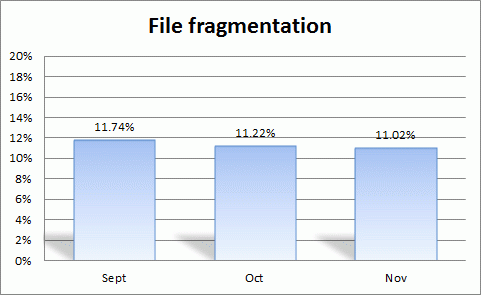
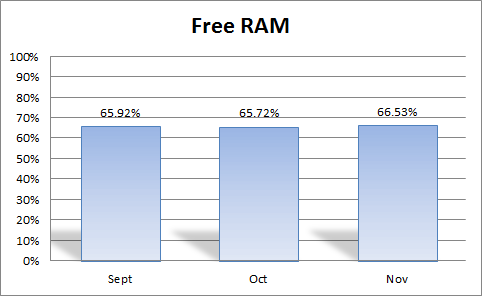
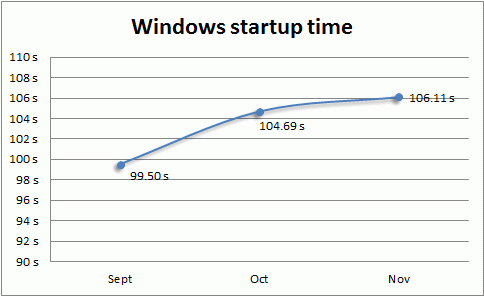
System Speed Risks posed by speed and performance drains Various inefficiencies can bring down a computer’s processing efficiency, including fragmented hard drives, splintered system memory, scattered registry detritus, and unneeded programs starting with Windows. Average performance drains found on sample PCs| % without optimized internet settings: | 0.37% | -1.5% | | % with insufficient memory levels: | 25.67% | -4.52% | | % fragmentation on system drive: | 11.49% | -9.58% | | Avg number of startup bottlenecks: | 2.21 | -0.38 (14.72%) |
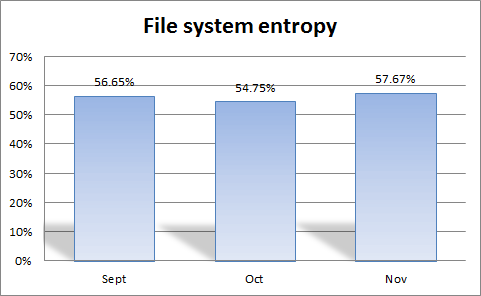
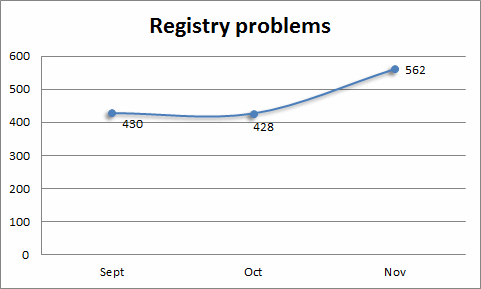
System fitness Risks posed by PC entropy or data corruption As a result of ongoing everyday use, a computer can slowly degrade and become unstable, resulting in unexpected crashes, difficult to diagnose error messages, and a host of other nuisances that can perplex and frustrate users. Some defects that normally begin appearing over time are invalid registry references, broken shortcuts, hidden spyware, obsolete uninstallation files, and physical errors or disjointed data on the hard drive and other devices. Average fitness detractors found on sample PCs| % with hard drive corruption: | 66.23% | -5.97% | | Avg number of registry problems: | 22.01 | -2.62 (10.63%) | | Avg number of broken shortcuts: | 3.67 | +2.41 (190.88%) | | Avg number of invalid uninstallers: | 13.6 | +1.98 (17.01%) |
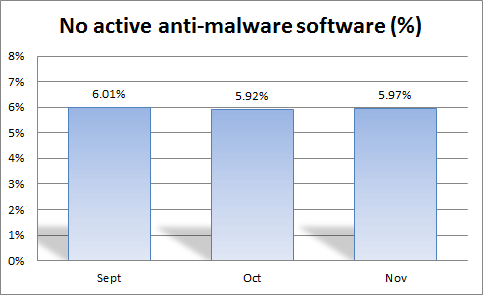
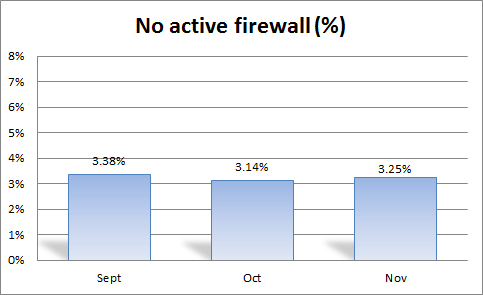
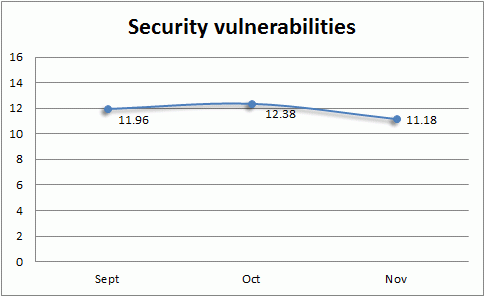
System Security Risks posed by security vulnerabilities and destructive programs Computer performance and stability can be greatly affected by security holes that allow viruses, spyware, hackers, and other destructive and/or destabilizing forces to deeply lodge themselves between the operating system and its user. A destructive program infection can not only result in actual computer or file damage, but also a conduit for identity and data thieves seeking to funnel personal or financial information away from the host PC. Average security vulnerabilities found on sample PCs| Avg number of security holes: | 21.7 | +3.02 (16.19%) | | % without active virus protection: | 76.99% | +18.65% | | % without active firewall protection: | 63.08% | +30.16% |

|